Taíno CultureCaribbean PrideBorikénI Call You SunStill HereZemí SpiritIndigenous PrideWear the AncestorsGuanín GoldQuisqueyaXaymacaAreítoBohíqueCaciqueTaíno CultureCaribbean PrideBorikénI Call You SunStill HereZemí SpiritIndigenous PrideWear the AncestorsGuanín GoldQuisqueyaXaymacaAreítoBohíqueCacique
Our Story
Born from Borikén
Taino Gold did not start as a brand. It started as a declaration.
When Efrain DeJesus looked at the streetwear world, he saw a thousand brands using "tribal" imagery without naming a single people. He saw indigenous symbols stripped of their meaning, sold without their story. That bothered him.
So he built something different. Something specific. Every piece in this collection carries authentic Taíno symbols — the zemí mask, the guanín sun, the sacred spirals carved into Caribbean stone for over a thousand years. Not generic. Not borrowed. Ours.
The Taíno were the original people of the Caribbean. They were here first. Their blood runs in millions of Boricuas, Dominicans, Cubans, Haitians, and Jamaicans across the diaspora. They never disappeared.
Taino Gold exists because that story deserves to be worn with pride, not erased into the background. We do not explain ourselves — we declare ourselves.
— Efrain DeJesus · Founder & Creator
1,000+Years of Taíno History
3M+Puerto Ricans with Taíno Ancestry
49+Pieces in the Collection
∞Generations of Resistance
✦ The Signature Collection
Crowned in Gold. Rooted in Borikén.
Every stitch is a declaration. Every zemí mark is a prayer carried forward. Taino Gold is not just streetwear — it is living memory worn by a people who refused to disappear.
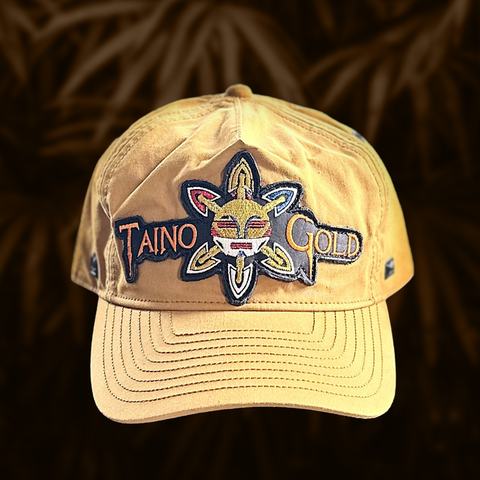
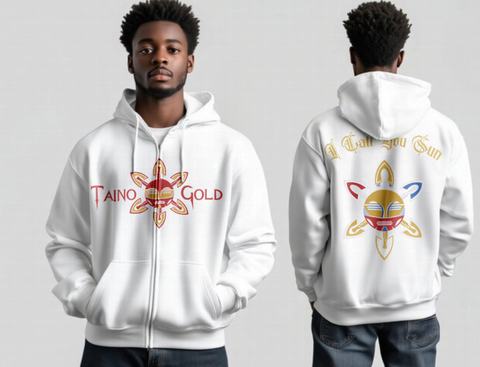
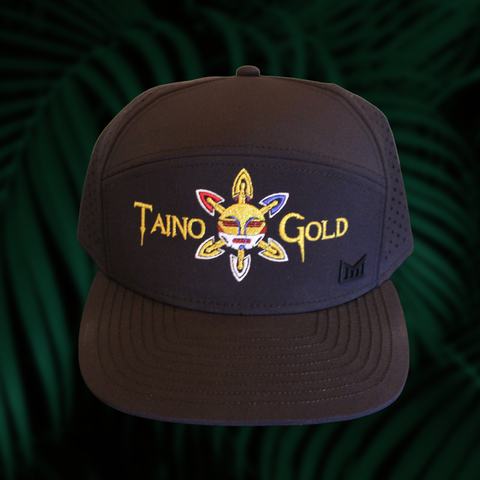
From embroidered caps to premium hoodies, each piece is built around authentic Taíno symbols — the guanín sun, the zemí mask, the sacred face that has watched over the Caribbean for a thousand years.
When you wear Taino Gold, you say: I know where I come from.
A brand born from Caribbean pride · Conceived and built by
Efrain DeJesus · All creative works, designs & brand identity are his intellectual property.
Premium streetwear rooted in 1,000 years of Taíno culture. Every piece tells a story that was never meant to be forgotten.
Loading collection from the shop...
Just Dropped
New Arrivals
The latest pieces added to the collection.
Loading latest drops...
Headwear
The Hat Collection
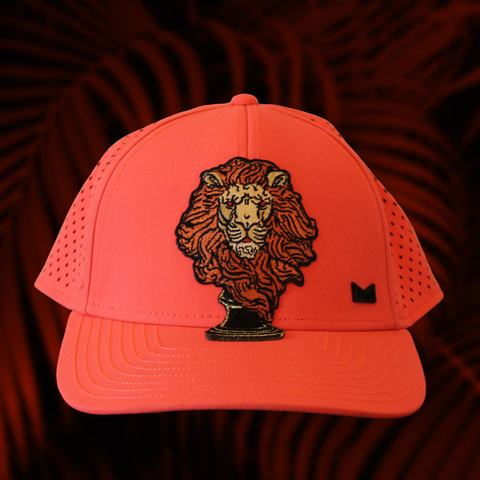
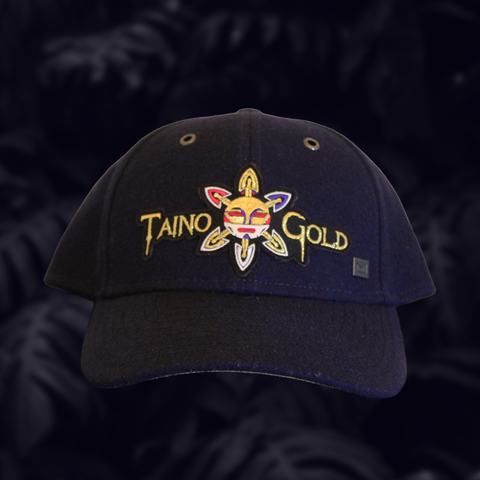
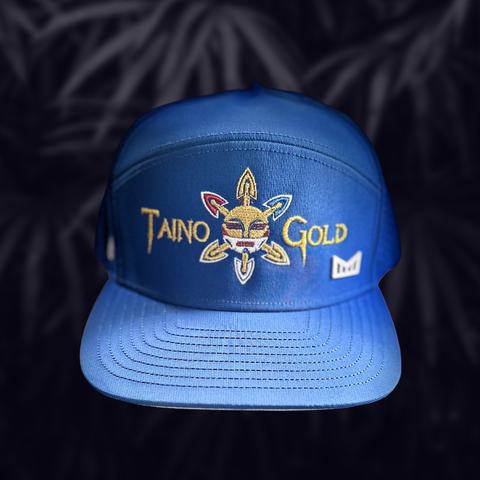
Embroidered with the zemí. Worn with pride. Every shape, one spirit.
Loading hats from the shop...
Editorial
The Lookbook
Heritage in motion. Every piece, every story.
Loading lookbook...
Who We Are
The Taíno Never Disappeared
The Taíno were the first people of the Caribbean — architects, farmers, warriors, and artists
whose culture shaped every island we call home. Their blood runs in millions.
Their language gave us words we speak every day. They are still here.
🌊
History & Resistance
1,000 years of survival. The Taíno never vanished — their descendants number in the millions across the Caribbean diaspora today.
☀️
Symbols & Art
Every design uses authentic Taíno petroglyphs — the zemí mask, the guanín sun, sacred spirals carved into stone centuries ago.
🌴
Connection to Nature
The sea, the ceiba tree, the storm, the sun — the Taíno lived in sacred harmony with the natural world. So does this brand.
🔥
Pride & Identity
Wearing Taino Gold is a declaration: I know where I come from. I carry my ancestors forward. I am proud of what they built.
Living History
Know Your Roots
Every product you wear carries a story. Here is the history behind the symbols, the people, and the culture that inspired Taino Gold.
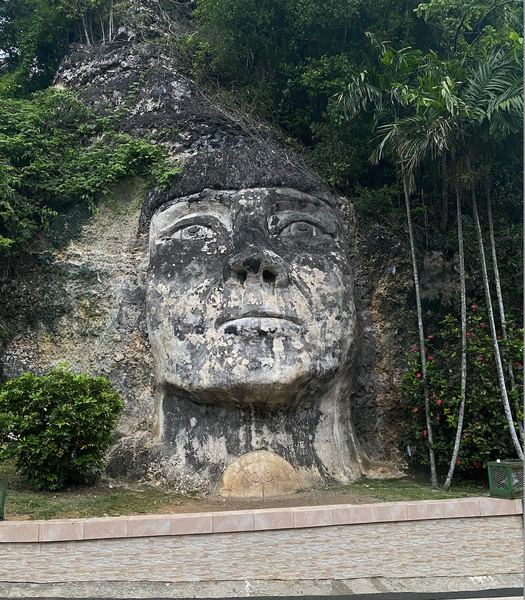
Jayuya, Puerto Rico
The Face of the Ancestors
This massive stone face was carved directly into a cliff in Jayuya, Puerto Rico — one of the island's most important Taíno heritage sites. Known as the Rostro del Cacique (Face of the Chief), it represents a Taíno cacique (leader) and stands as a permanent monument to Indigenous presence on the island. The golden disc beneath the face is a recreation of a guanín — the sacred gold-copper alloy prized by the Taíno as a spiritual object.
Borikén · Puerto Rico
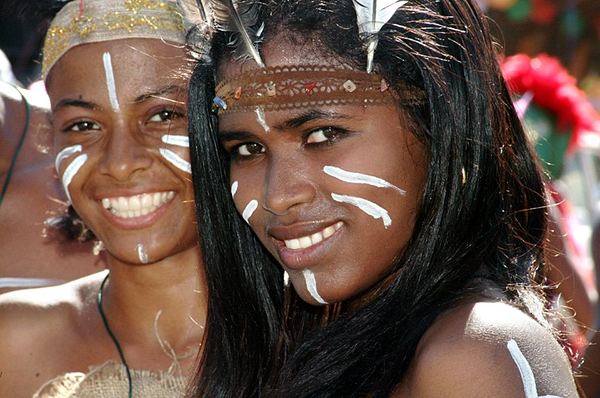
Taíno Descendants Today
We Are Still Here
These women wear traditional Taíno face markings and feather headdresses at a cultural celebration — proof that Taíno heritage is not extinct but living. Taíno descendants across Puerto Rico, Cuba, the Dominican Republic, and the diaspora actively practice and preserve their culture. DNA studies confirm that over 60% of Puerto Ricans carry Taíno mitochondrial DNA. The areíto — sacred ceremony of song, dance, and collective memory — continues today.
Living Culture · Still Here
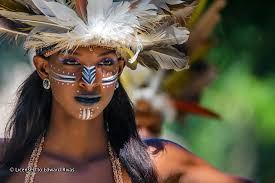
Taíno Ceremonial Dress
The Warrior Spirit
This image captures a Taíno woman in full ceremonial regalia — feathered headdress, face paint in geometric patterns, and traditional dress. The Taíno were not only peaceful farmers but fierce warriors who resisted Spanish colonization for decades. Cacica Anacaona (Golden Flower) of Hispaniola was one of the greatest Taíno leaders, a poet and ruler who organized resistance before being executed by the Spanish in 1504. She is remembered as a hero of the Caribbean people.
Cacica · Warriors · Resistance
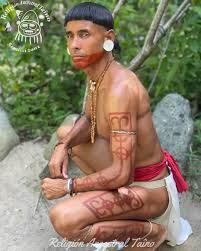
Taíno Body Art & Spirituality
Ink of the Ancestors
Taíno men and women covered their bodies in sacred markings — painted with bixa (red dye) and jagua (black dye), and tattooed with petroglyphic symbols. Each marking had spiritual significance, indicating social rank, clan affiliation, and connection to the zemís (spirit forces). The bohíque — Taíno spiritual leader — would interpret the will of the cemís and lead the areíto ceremony. Body art was not decoration; it was prayer made visible.
Bohíque · Cemí · Areíto
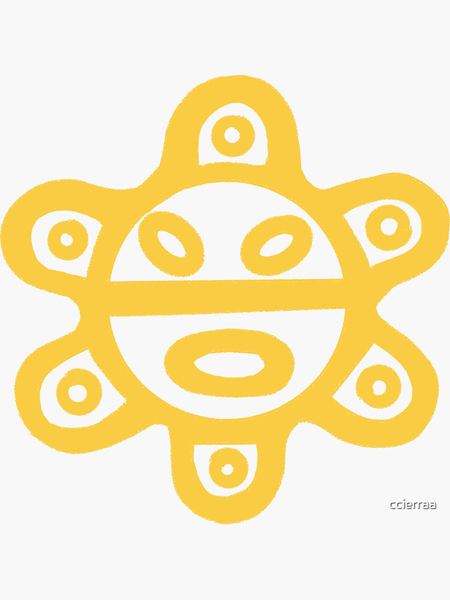
The Guanín Sun — Zemí Mark
The Zemí Sun — Heart of Taino Gold
This golden sun figure — the zemí — is at the center of every Taino Gold design. The zemí was the most sacred object in Taíno spirituality: a physical representation of the spirit forces that governed health, weather, crops, and life itself. The six-pointed sun form with the mask face at center represents Yúcahu, the supreme Taíno deity of cassava and the sea, son of Atabey, mother of all living things. The guanín alloy (gold + copper) was believed to carry divine energy.
Zemí · Yúcahu · Atabey · Guanín
Taíno Symbol Glossary
Reading the Petroglyphs
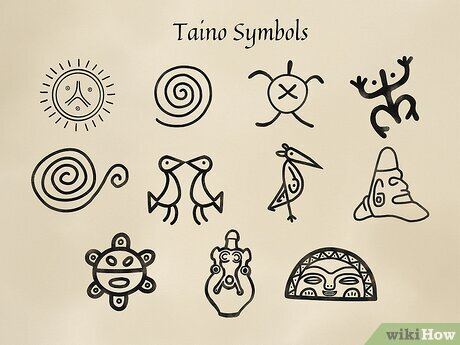
The Taíno carved their symbols into stone across the Caribbean — petroglyphs found at Caguana (Puerto Rico), El Chorro de Maíta (Cuba), and across Hispaniola. Key symbols include: the spiral (water and cycles of life), the coquí frog (fertility and rain), the sun mask (Yúcahu's face), the turtle (earth and longevity), the bird (messenger between worlds). Each symbol in Taino Gold's designs is drawn from this authentic visual language.
Petroglyphs · Caguana · Symbols
Zemí Artifact — Museum Collection
The Original Zemí Object
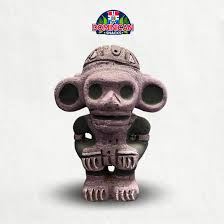
This is a genuine carved zemí — a three-pointed stone figure that Taíno people kept in their homes, placed in their conucos (farming mounds), and used during areíto ceremonies. Zemís were believed to hold the power of ancestors and spirit forces. Families passed them down for generations. The distinctive triangular face with wide eyes and open mouth seen in Taino Gold's logo is drawn directly from this ancient ceramic tradition, which dates back over 1,500 years in the Caribbean.
Zemí · Artifact · 1500+ Years Old
Yucayeque — The Taíno Village
The Yucayeque — Village Life
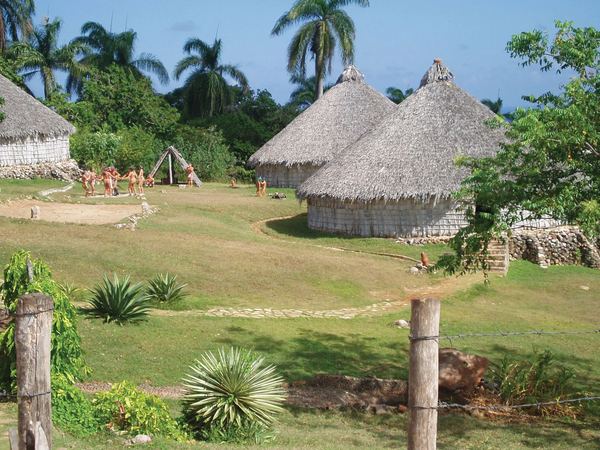
This is a recreation of a Taíno yucayeque (village) in Santiago de Cuba. The circular bohíos (thatched homes) surrounded a central batey (plaza) where the areíto was performed and the batey ball game was played. The Taíno lived in complex, organized communities led by caciques, with social classes including nitaíno (nobles) and naboría (workers). Their agricultural system — growing cassava, yuca, corn, and sweet potatoes in conucos — was so advanced that Spanish colonizers adopted it to survive.
Yucayeque · Bohío · Batey · Conuco
Taíno Petroglyphic Art
A Visual Language of Spirit
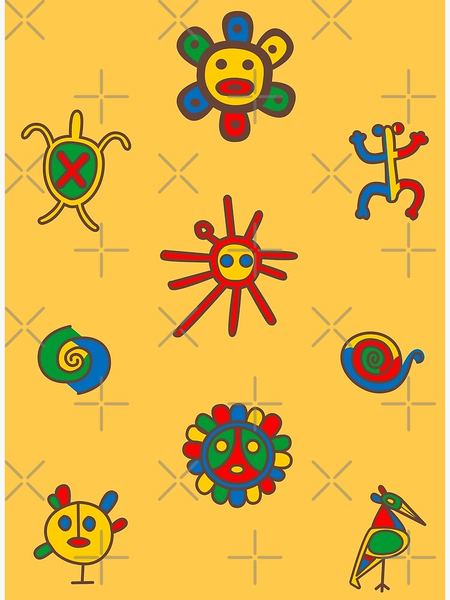
The Taíno created one of the most distinctive visual languages of the ancient world. The colorful symbols shown here — the sun-face zemí, the spiral coquí, the dancing figure, the bird messenger — are petroglyphs found carved across the Caribbean. The Taíno word for this art was connected to the areíto: ceremony, song, and image were all the same sacred act. When you see the zemí mark on a Taino Gold piece, you are seeing 1,000 years of unbroken artistic tradition made wearable.
Petroglyph Art · Visual Language
The Caribbean — Taíno Homeland
Borikén, Quisqueya, Xaymaca
The Taíno named the islands we know today: Borikén (Puerto Rico — "Land of the Valiant Lord"), Quisqueya (Hispaniola — "Mother of All Lands"), Xaymaca (Jamaica — "Land of Wood and Water"), Cuba (their own name survived unchanged). They gave the world the words hurricane (huracán), hammock (hamaca), barbecue (barbacoa), canoe (canoa), and tobacco (tabako). Every time you say these words, you speak Taíno.
Borikén · Quisqueya · Xaymaca
The Foundation
The Cultural Sacred Scroll
Everything Taino Gold stands for — our history, symbols, voice, and mission — written in one place. This is the soul of the brand.
🌿
Who the Taíno Were
The original people of the Caribbean. Farmers, warriors, artists, and spiritual leaders. Still here. Never gone.
☀️
Core Symbols
Zemí mask, guanín sun, coquí, Caguana petroglyph cross, spiral of water. Every symbol comes from authenticated Taíno tradition.
"Different isn't something to fix. It's something to celebrate.
I don't have to be normal. I have to be Taíno.
And Taíno is more than enough."
— Taino Gold · Wear the Ancestors · 2026
Taino Gold — Cultural Sacred Scroll
The complete foundation of who we are, what we stand for, and how we speak · Created by Efrain DeJesus
Who the Taíno Were
The Taíno were the original Indigenous people of the Caribbean — the first inhabitants of what are now Puerto Rico, Cuba, the Dominican Republic, Haiti, Jamaica, and the Bahamas. They were not primitive. They were architects who built complex yucayeques (villages), master farmers who developed the conuco system, expert navigators who traveled across the Caribbean Sea, and artists whose petroglyphs are still being discovered today.
When Columbus arrived in 1492, he encountered the Taíno first. He wrote in his journal: "They are a loving people without covetousness... and they were very well built, with very handsome bodies and very good faces." Within decades, Spanish colonization, forced labor, and disease devastated the population — but the Taíno were never truly erased. Their descendants number in the millions. Their culture survived through language, blood, and spirit.
History & Resistance
Cacique Agüeybaná II led the Taíno uprising against Spanish rule in Puerto Rico in 1511 — known as the Taíno Revolt. Cacica Anacaona (Golden Flower) of Hispaniola was a poet, ruler, and organizer of resistance executed by the Spanish in 1504. These were not passive victims — they were warriors who fought for their people with everything they had.
Today, the United Confederation of Taíno People (UCTP) continues the fight for official recognition of Taíno identity and rights. DNA studies confirm that over 60% of Puerto Ricans carry Taíno mitochondrial DNA — the ancestors are literally in our blood.
Spirituality & The Zemí
Taíno spiritual life centered on the cemí/zemí — spirit forces that inhabited objects, natural features, and the physical world. Zemís were kept in carved stone or wood figures, passed down through families, and honored in the areíto — a sacred ceremony combining song, dance, collective memory, and spiritual communion.
The supreme deities were Yúcahu (lord of cassava and the sea) and his mother Atabey (goddess of fresh water, fertility, and the moon). After death, ancestors went to Coaybay — the realm of the dead, ruled by Maquetaurie Guayaba — where they rested by day and emerged at night as spirits.
The bohíque (spiritual leader) served as the bridge between the living world and the spirit realm, interpreting the will of the zemís and leading the areíto ceremony.
The Sacred Symbols — Used in Our Designs
Every symbol in Taino Gold comes from authenticated Taíno visual tradition. No generic "tribal" art. No Aztec or Maya elements. Pure Taíno:
Zemí Sun Mask
Six-pointed sun with mask face — Yúcahu's presence. The heart of our brand logo.
Guanín
Sacred gold-copper alloy worn by caciques. Symbol of divine status and spiritual power.
Coquí Frog
Endemic to Puerto Rico. Symbol of fertility, rain, and the voice of Borikén.
The Spiral
Represents water, the cycle of life, and the movement of cosmic energy.
Four-Direction Cross
From Caguana Ceremonial Park, PR. Represents the four winds and cosmic order.
The Turtle
Symbol of the earth, longevity, and the wisdom of the ancestors.
The Heron Bird
Messenger between worlds — the physical and spiritual realms.
Ceiba Tree
Sacred tree of the Taíno — the axis connecting earth, underworld, and sky.
Correct Taíno Terminology
Cacique / Cacica
Male / Female chief or leader
Bohíque
Spiritual leader (NOT "shaman")
Cemí / Zemí
Sacred spirit force / object
Areíto
Sacred ceremony of song and dance
Batey
Ball court / ceremonial plaza
Conuco
Raised farming mound
Borikén
Puerto Rico — "Land of the Valiant Lord"
Quisqueya
Hispaniola — "Mother of All Lands"
Xaymaca
Jamaica — "Land of Wood and Water"
Guanín
Sacred gold-copper alloy
Huracán
Hurricane — Taíno word adopted into Spanish & English
Coaybay
Realm of the ancestors (ruled by Maquetaurie Guayaba)
Yucayeque
Village community
Nitaíno / Naboría
Noble class / Working class
Brand Voice — How We Speak
We speak as descendants, not tourists. We do not explain our culture — we declare it. We are bold, proud, and rooted. We honor the elders without being antiquarian. We are street and we are sacred at the same time.
DO: "The Taíno are still here." / "This is Borikén." / "I Call You Sun." / "Wear the Ancestors."
DO NOT: "Inspired by Indigenous art." / "Tribal design." / "Ancient culture." / Aztec or Maya references.
Collection Roadmap
The Awakening (Now) — Signature Tee, I Call You Sun Hoodie, hat collection launch.
Borikén Rising (June — PR Day Parade) — Borikén Tee, Coquí Collection, Dark Zemí Hoodie.
Atabey — The Goddess Collection (Oct 14 — Indigenous Peoples Day) — Women's line expansion.
The Four Elements (Holiday) — Limited 4-piece set: water, fire, earth, wind.
Yucayeque — The Village (Year 2) — Varsity jackets, bombers, embroidered premium line.